Plan your stay
Plan your stay at the river
Book directly with your dates, or write to the reservations team. They know the river through every season and will help you find the right moment.
Book directly
Choose your dates
Live rates and availability from the camp's own booking engine.
Or plan it with us
The reservations team
They know the river through every season and will help with dates, rooms, transfers and experiences.
- Phone
- +254 (0)100 363608
- Hours
- Monday to Friday, 8am to 6pm East Africa Time
Enquire
Tell us about your journey
A member of the reservations team will reply within a day, often sooner.
Getting there
Nairobi to the river
- By air
- Scheduled light-aircraft flights from Nairobi's Wilson Airport land at Kichwa Tembo or Musiara airstrip.
- Airstrip transfers
- The camp meets you at Kichwa Tembo or Musiara airstrip, USD 15 per person each way. Kichwa Tembo is about 15 minutes from camp by road.
- By road
- A scenic drive of around 6 to 7 hours from Nairobi. The camp's road transfer is USD 500 per vehicle each way, for up to seven guests.
When to come: the river, month by month
The Great Migration at the river
January
Green plains
The short rains have passed and the plains are green. The Mara's resident wildlife stays close, and the light is clear after the rain.
February
Calving in the south
Far to the south, the herds are calving in the Serengeti. Here the grass is long and the resident lions, elephants and giraffes have the plains to themselves.
March
Before the long rains
Warm days and green country. Afternoon storms begin to build over the escarpment toward the end of the month.
April
The long rains
Dramatic skies and heavy afternoon rain. The bush is thick and green, and the birdlife is at its richest.
May
Green season
The rains ease and the river runs full. A quiet month on the plains, with the camp at its most unhurried.
June
The plains dry out
Cool mornings and drying grass. The herds begin their journey north, and the first columns can reach the Mara late in the month.
July · Great Migration
The herds arrive
Wildebeest and zebra pour onto the plains and gather along the river. The first crossings begin close to camp.
August · Great Migration
Crossing season
The Great Migration fills the Mara. Crossing days start early, waiting on the bank with your guide until the whole river moves.
September · Great Migration
The river moves
Herds cross back and forth as the rains fall to the south. Some of the best crossing days of the year.
October · Great Migration
The last crossings
The herds begin to turn south. The final crossings of the season, and golden afternoons on the plains.
November
The short rains
Brief, dramatic showers and green shoots. The herds return to the Serengeti and the Mara settles into a quieter rhythm.
December
Quiet plains
Green grass, clear evenings by the fire and the resident wildlife close to camp. A gentle month to end the year at the river.
Crossings follow the herds and the water level, so each crossing day is different. Your guide will read the river with you.
What to expect
- Setting
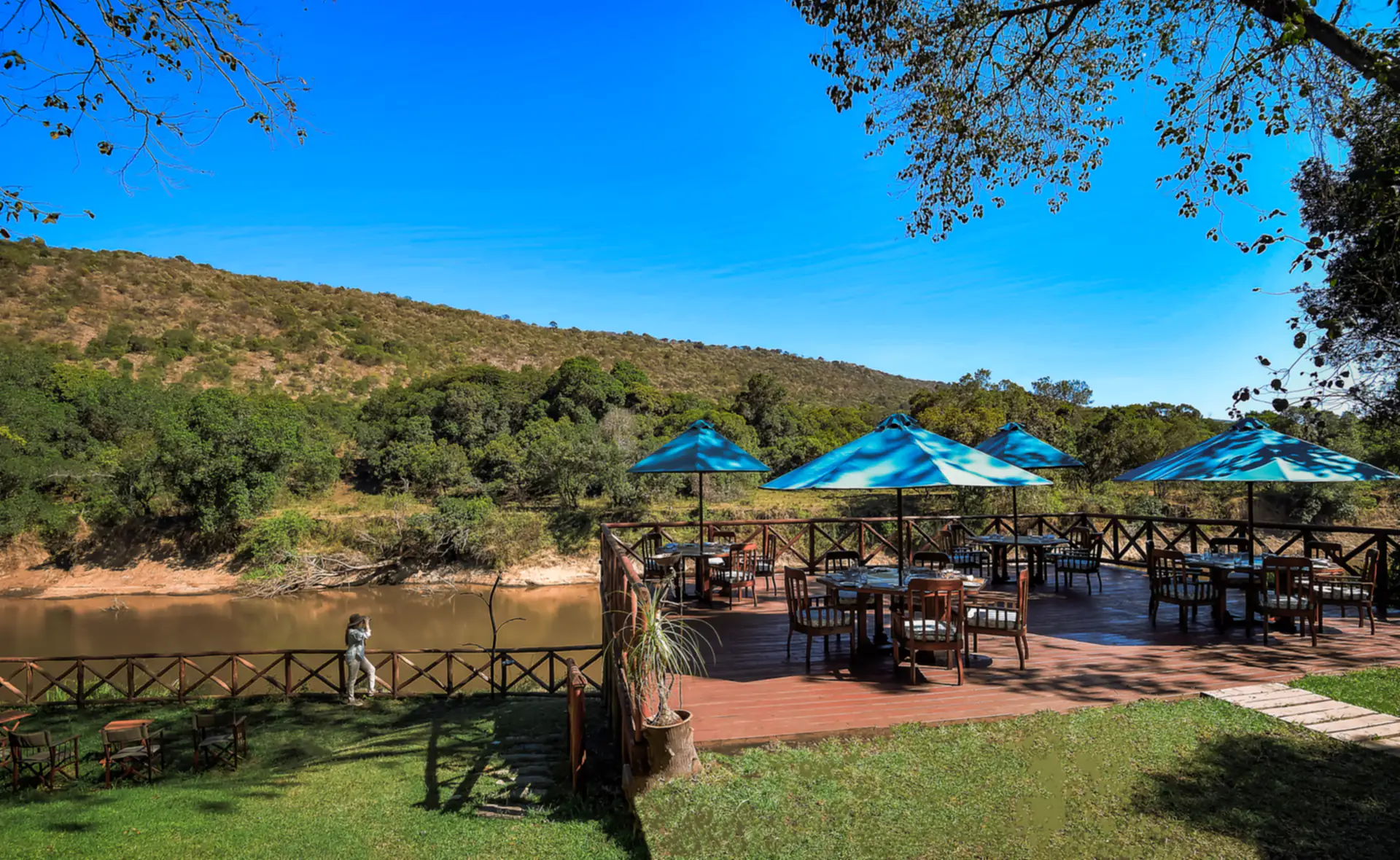
- A bend of the Mara River at the foot of the Oloololo Escarpment, in the Maasai Mara, Kenya.
- Season
- Open all year. The Great Migration reaches the river from July to October.
- Stay
- River tents and bush tents with private terraces, and a two-bedroom log cabin with a deck over the river.
- At the table
- Breakfast, lunch and dinner in the garden or on the deck, the Zebra Bar until bedtime and a fire every night.
- In camp
- Swimming pool and deck, Wi-Fi throughout, a gift shop, laundry and a medical service.
- Getting there
- About 15 minutes by road from Kichwa Tembo Airstrip, with transfers from Kichwa Tembo or Musiara.
Questions
Before you travel
Where is Mara River Camp?
On a bend of the Mara River at the foot of the Oloololo Escarpment, in Kenya's Maasai Mara. The camp is about 15 minutes by road from Kichwa Tembo Airstrip.
How do I get to the camp from Nairobi?
Most guests take a scheduled light-aircraft flight from Nairobi's Wilson Airport to Kichwa Tembo or Musiara airstrip, where the camp meets them for USD 15 per person each way. By road, the scenic drive takes around 6 to 7 hours, and the camp's road transfer is USD 500 per vehicle each way for up to seven guests.
When can I see the Great Migration?
From July to October, when the wildebeest and zebra reach the Mara River. Several crossing points lie close to camp. Crossings follow the herds and the water level, so each crossing day is different.
What kinds of rooms are there?
River tents on the bank of the river for up to three guests, bush tents with more space for up to four, and Simba's Den, a two-bedroom log cabin with a deck over the river for up to six. Each has a private terrace or deck and an en-suite bathroom.
Is the camp suited to families?
Families are welcome. Simba's Den, the two-bedroom log cabin, sleeps up to six and suits families and small groups travelling together.
What comes with every stay?
A guided nature walk around camp, the hippos at dusk from the River Deck, evenings around the fire, sunrise stillness on the River Deck and the pool. Each of them earns a stamp in your Exploreans Passport.
How are experiences arranged?
Tell the reservations team what you would like before you arrive, or ask at reception once you are here. Rates for each experience are on the experiences pages; park and conservancy fees are payable on top where shown. Balloon flights are best booked ahead.
Are park fees included in the rates?
Maasai Mara National Reserve park fees and Ole Sugut Conservancy fees are payable on top of experience rates, as shown with each experience. Rates are in US dollars and subject to change; the reservations team confirms them when you book.
Is there Wi-Fi?
Yes, throughout the camp.